An After-School Landing Routine for the First Twenty Minutes Home
Create a gentler transition from the doorway to the rest of the afternoon with a few practical household decisions.
Shopping note: The retailer links in this article are ordinary links. We are not currently using affiliate tracking. If a link earns us a commission in the future, we will label it. Our disclosure.
Start with the real day
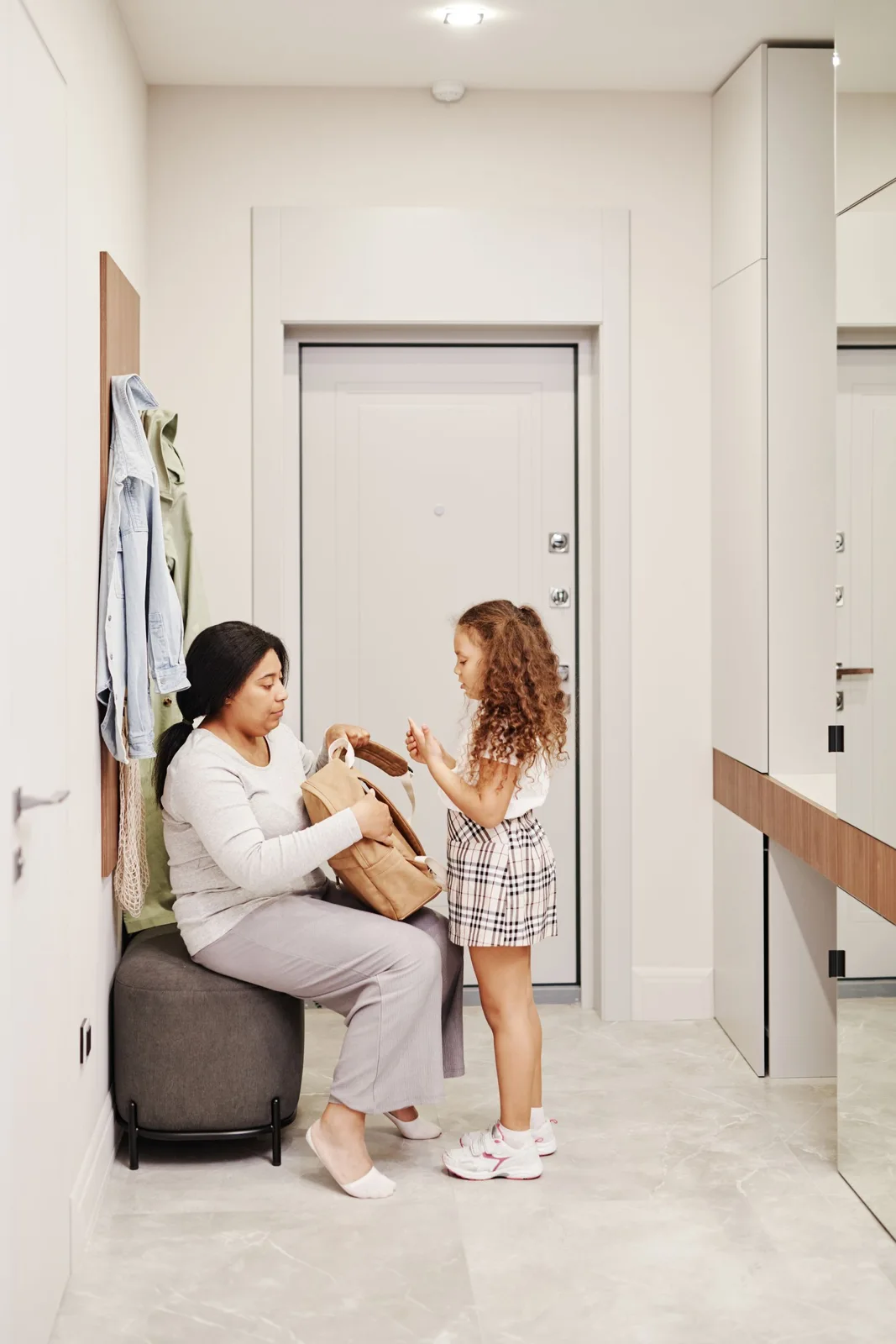
The front door opens and several needs arrive at once: bags, conversation, quiet, food and a paper somebody wants signed immediately. An after-school routine does not have to organize every minute of the afternoon. Its useful job is to make the first few actions predictable enough that the household can settle. Start with the transition you have, including work calls, sibling schedules and the size of your home.
Observe an ordinary week before making rules. Some children want to tell a story immediately; others prefer a little space before talking. One adult may be able to help at the door while another is still working. A practical routine leaves room for those differences. Choose a few household actions, then allow the order and pace to remain flexible. Predictability should reduce negotiation, not create another performance to grade.
Decide what happens to belongings
Give the bag a landing spot and choose where papers are placed. A family can spend surprising time discussing a missing folder that never had a home. Make the storage visible and accessible for the people using it. If bags need to be emptied, decide which contents are checked now and which can wait. Moving everything onto the kitchen table may only relocate the clutter to the place you need for dinner.
A small tray for adult action helps distinguish a form from an ordinary worksheet. Keep personal information away from visitors and discard or store documents appropriately. Encourage age-appropriate participation without expecting every household member to complete the same tasks independently. The system can support growing responsibility while still making it clear who needs to review and sign important material.
Give the transition some breathing room
Do not schedule the first conversation as a detailed interrogation. A simple welcome and an available place to sit can do more for the transition than a long list of questions. If your household has a usual snack or drink routine, organize its preparation around what already works for you. This is a household-flow suggestion, not nutritional advice. The practical goal is to avoid making the same setup decision from scratch each day.
Protect the surfaces needed for the next activity. A cleared corner of a table is enough; a dedicated homework room is unnecessary. If the afternoon includes an immediate departure, keep the next bag or item nearby and explain the plan. On days with no commitment, let the routine end rather than filling the available time with more organizing. A transition should lead into the afternoon, not consume it.
Buy fewer tools than the routine has steps
A basket, tray or washable table covering can make an existing habit easier. None can create agreement about who checks the papers. Test the arrangement with household items first. If the paper stack keeps spreading, a larger tray may help, but an unmade decision about what to keep needs a different solution. Look for the point of friction before shopping for storage.
Review the routine after a fortnight. Notice whether belongings are easier to find and whether the adults know what requires attention. Remove any step that produces more argument than benefit. Busy days, tired days and changed schedules will interrupt the plan; that does not mean the whole arrangement has failed. Keep the essential landing actions small enough to restart the following afternoon without a complete household reset.
A short checklist to keep
Keep these decisions somewhere useful rather than turning them into another elaborate system. For this project, the most important comparison is between what already works and what a purchase would actually change. Creates a recognizable home for bags or soft layers. It needs enough floor space to avoid blocking the route. That tradeoff is worth weighing before choosing the open basket simply because it appears in an attractive room or outfit.
An alternative is to focus on the document tray. Separates papers that require a decision. A tray can overflow without an adult review habit. Compare the two jobs instead of assuming both purchases are necessary. Start with the option that addresses the repeated inconvenience you have identified. When neither problem is happening in your household, keep using what you have. A buying guide should make it easier to decide against an unnecessary purchase as well as help you choose a useful one.
- Choose a bag landing spot.
- Separate papers that need adult action.
- Leave space before detailed questions.
- Adjust for days with an immediate next stop.
Shop with a purpose
Options to consider
These are research starting points, not hands-on test results. Compare current specifications, dimensions, care instructions, return terms, and availability with the retailer before buying.
Open basket
Creates a recognizable home for bags or soft layers.
The tradeoff: It needs enough floor space to avoid blocking the route.
Explore at the retailer ↗Document tray
Separates papers that require a decision.
The tradeoff: A tray can overflow without an adult review habit.
Explore at the retailer ↗A few common questions
Do I need to buy everything mentioned?
No. Begin with what you own, then choose only the item that solves a specific problem. The open basket and document tray have different jobs; neither is a requirement for following the advice.
What should I compare before ordering?
Check dimensions or garment measurements where relevant, current care and use instructions, delivery charges and return conditions. In particular, remember this tradeoff: It needs enough floor space to avoid blocking the route. Use the retailer’s current information rather than assuming a photograph answers those questions.