A School-Morning Launch Pad That Fits Your Actual Hallway
Make the last ten minutes before leaving easier with one small, realistic home for bags, shoes and tomorrow’s essentials.
Shopping note: The retailer links in this article are ordinary links. We are not currently using affiliate tracking. If a link earns us a commission in the future, we will label it. Our disclosure.
Start with the real day
The difficult part of a school morning is often the final stretch. Breakfast is finished, everyone is dressed, and then a library book disappears beneath yesterday’s mail. A useful launch pad addresses that very ordinary bottleneck. It does not need a mudroom, a row of matching lockers or a new organizing personality. It needs a location that sits on the route your household already takes to the door.
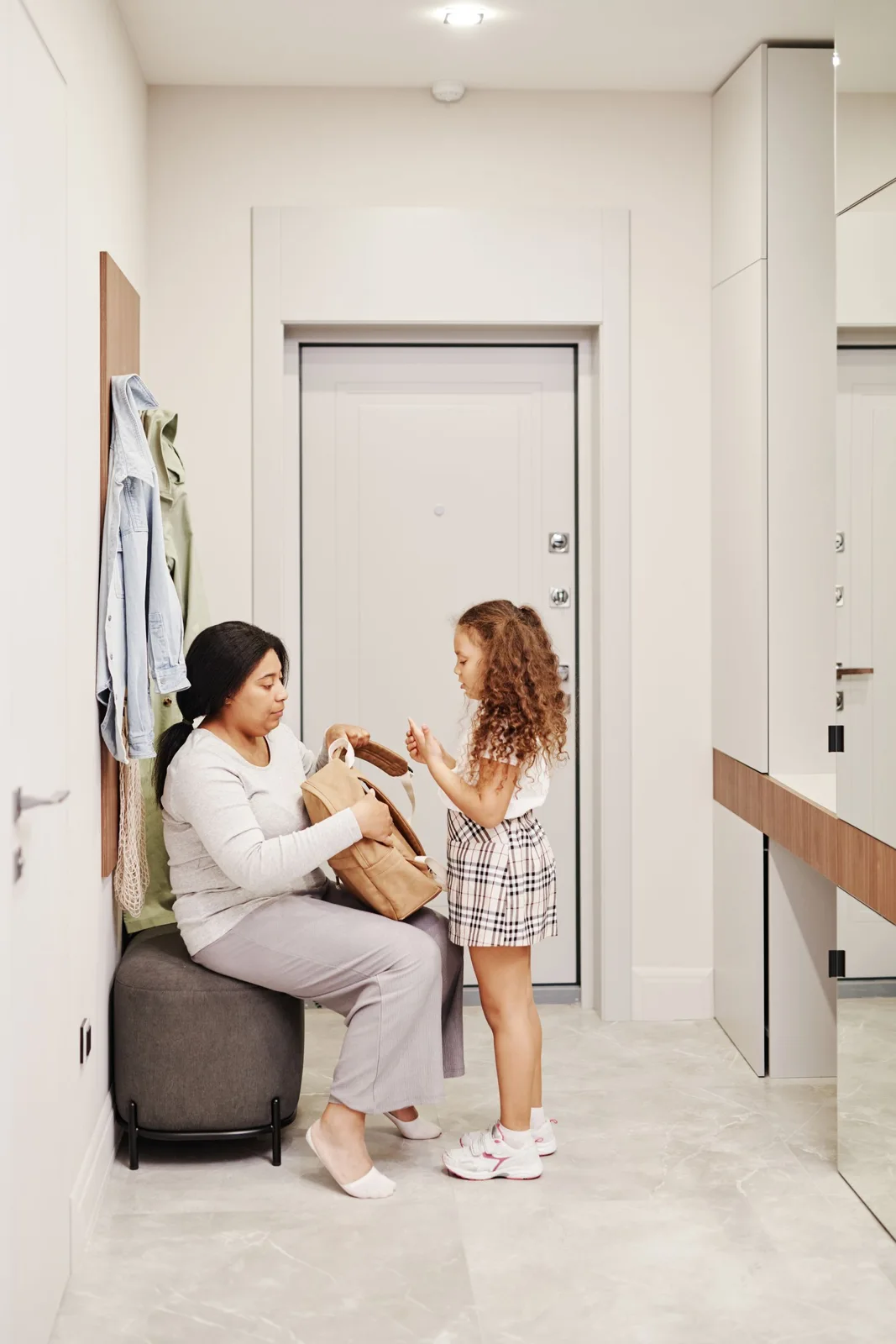
Start by noticing where things land during three normal afternoons. If bags always drop beside the kitchen, a beautiful system at the front entrance may remain empty. Choose the closest workable spot, leaving the walking route clear. In a small apartment, this might be one basket beneath a console and two adult-installed hooks appropriate for the wall. The goal is a recognizable address for tomorrow’s belongings, rather than storage for every possession associated with school.
Give each item a job, then give it an address
Separate items that leave every day from things that leave occasionally. A bag and shoes need obvious homes. A permission slip needs a visible action spot. Seasonal gear can stay somewhere else until it is actually relevant. Combining these categories in one deep bin tends to bury the urgent piece beneath a spare sweater. A shallow tray can work for paper, while a basket handles soft items without demanding careful folding.
Let each family member use the system in their own way. One person may prefer an open cubby; another may reliably hang a bag but ignore a labeled box. Choose the least complicated arrangement that supports the habit. If two children share the area, distinct positions can be more useful than elaborate labels. Keep adult keys and delicate items separate, and place furniture and wall fittings according to their instructions and the household’s needs.
Make the evening step very small
The launch pad cannot pack a bag by itself. Attach a brief check to something that already happens, such as clearing the dinner table. Ask what leaves tomorrow, whether anything needs a signature and where the weather layer belongs. This should feel like finishing the day, not beginning another hour of chores. When an item is missing, write it on a short note instead of relying on someone to remember it in the morning.
Prepare what is practical, not everything imaginable. Filling a water bottle or checking an activity schedule may fit one household; another may need those tasks to stay in the morning. Keep a little space for exceptions, including a project that cannot fit inside a bag. A simple written reminder beside the exit can point to the oversized item without turning the whole hallway into a staging warehouse.
Buy for the awkward item first
Before shopping, measure the widest bag, the available floor space and the clearance needed to open the door. A basket that photographs beautifully but cannot hold a backpack upright is the wrong basket. Open storage is easy to use but shows visual clutter. Closed storage looks quieter but introduces a lid or door that must be opened every time. Neither is universally better; the right choice follows the way your family actually puts things away.
Start with one container already in the house. Use it for a full school week before purchasing a matching set. If the arrangement works, look for smooth edges, accessible openings and a finish you can clean according to the manufacturer’s directions. Skip decorative signs, duplicate organizers and tiny compartments until a real need appears. A successful launch pad is the one people can find and use on a rushed Wednesday, even when the baskets do not match.
A short checklist to keep
Keep these decisions somewhere useful rather than turning them into another elaborate system. For this project, the most important comparison is between what already works and what a purchase would actually change. A broad opening lets a backpack go in without careful arranging. Open baskets leave their contents visible. That tradeoff is worth weighing before choosing the open storage basket simply because it appears in an attractive room or outfit.
An alternative is to focus on the shallow paper tray. Keeps a signature request separate from soft gear. A tray still needs regular clearing. Compare the two jobs instead of assuming both purchases are necessary. Start with the option that addresses the repeated inconvenience you have identified. When neither problem is happening in your household, keep using what you have. A buying guide should make it easier to decide against an unnecessary purchase as well as help you choose a useful one.
- Place tomorrow’s bag in its assigned spot.
- Put papers requiring action in a separate tray.
- Check the next day’s activity and weather needs.
- Keep the exit and door swing clear.
Shop with a purpose
Options to consider
These are research starting points, not hands-on test results. Compare current specifications, dimensions, care instructions, return terms, and availability with the retailer before buying.
Open storage basket
A broad opening lets a backpack go in without careful arranging.
The tradeoff: Open baskets leave their contents visible.
Explore at the retailer ↗Shallow paper tray
Keeps a signature request separate from soft gear.
The tradeoff: A tray still needs regular clearing.
Explore at the retailer ↗A few common questions
Do I need to buy everything mentioned?
No. Begin with what you own, then choose only the item that solves a specific problem. The open storage basket and shallow paper tray have different jobs; neither is a requirement for following the advice.
What should I compare before ordering?
Check dimensions or garment measurements where relevant, current care and use instructions, delivery charges and return conditions. In particular, remember this tradeoff: Open baskets leave their contents visible. Use the retailer’s current information rather than assuming a photograph answers those questions.