A Family Weekend at Home With Enough Plans and Enough Space
Create a satisfying weekend without packing every hour or buying a collection of activities.
Shopping note: The retailer links in this article are ordinary links. We are not currently using affiliate tracking. If a link earns us a commission in the future, we will label it. Our disclosure.
Start with the real day
A weekend at home can feel strangely difficult to plan. Without a booking or a destination, it is tempting to fill the calendar with ambitious projects or leave everything undecided until the day feels half gone. A middle ground works well: choose a few anchors and leave the space between them open. The weekend needs some shape, not a timetable for every person.
Start with the actual constraints. One adult may work part of Saturday, someone may need quiet time and a household task may genuinely need finishing. Put those realities on the table before choosing activities. Ask each person for one modest preference where appropriate. A walk, a shared game or making something at the kitchen table can be enough. Avoid promising several ideas that depend on the same limited energy.
Pick one shared anchor each day
A shared anchor is an activity people can recognize and anticipate. It might happen after breakfast or later in the afternoon. Give it a loose starting point so it does not drift indefinitely, but keep expectations proportional to the participants. A game does not need to become a tournament. An afternoon craft does not need to produce something suitable for display.
Check what the activity requires before the weekend begins. Look through the games you already own, confirm that pieces are present and choose materials suitable for those taking part. Follow product age guidance and supervision instructions where relevant. Borrowing books or using an existing set can provide variety without introducing more objects that will need storage after the weekend ends.
Give household jobs a boundary
Choose a defined task rather than announcing that Saturday will be for getting the house sorted. Clearing one shelf or preparing the next week’s bags has an endpoint. A whole-house project can absorb the day and leave everyone feeling they never had a weekend. Share tasks appropriately and explain which part needs cooperation. Keep complicated repairs or unfamiliar work separate from casual family activities.
Reserve some unplanned time. Different household members may use it differently, and that is acceptable. A weekend does not have to be continuously shared to feel connected. Let quieter periods exist without immediately filling them with another purchase, screen or outing. If weather changes a plan, return to the simple indoor anchor instead of rebuilding the entire day around a replacement event.
Buy an activity for repeat use
Before buying a new game or craft kit, consider setup, cleanup, storage and the range of people likely to use it. A long game can be enjoyable for some households and impractical for others. A kit with many consumable pieces may require replacements. Read the description and instructions rather than assuming the photograph shows everything included.
Set a modest budget based on the household’s priorities, and remember that novelty is not the same as usefulness. A borrowed game, a library book or materials already in a drawer may support the same kind of afternoon. After the weekend, notice which moments people wanted to continue and which felt forced. Repeat what worked without trying to upgrade it immediately. Familiar pleasures can become the weekend’s most dependable part.
A short checklist to keep
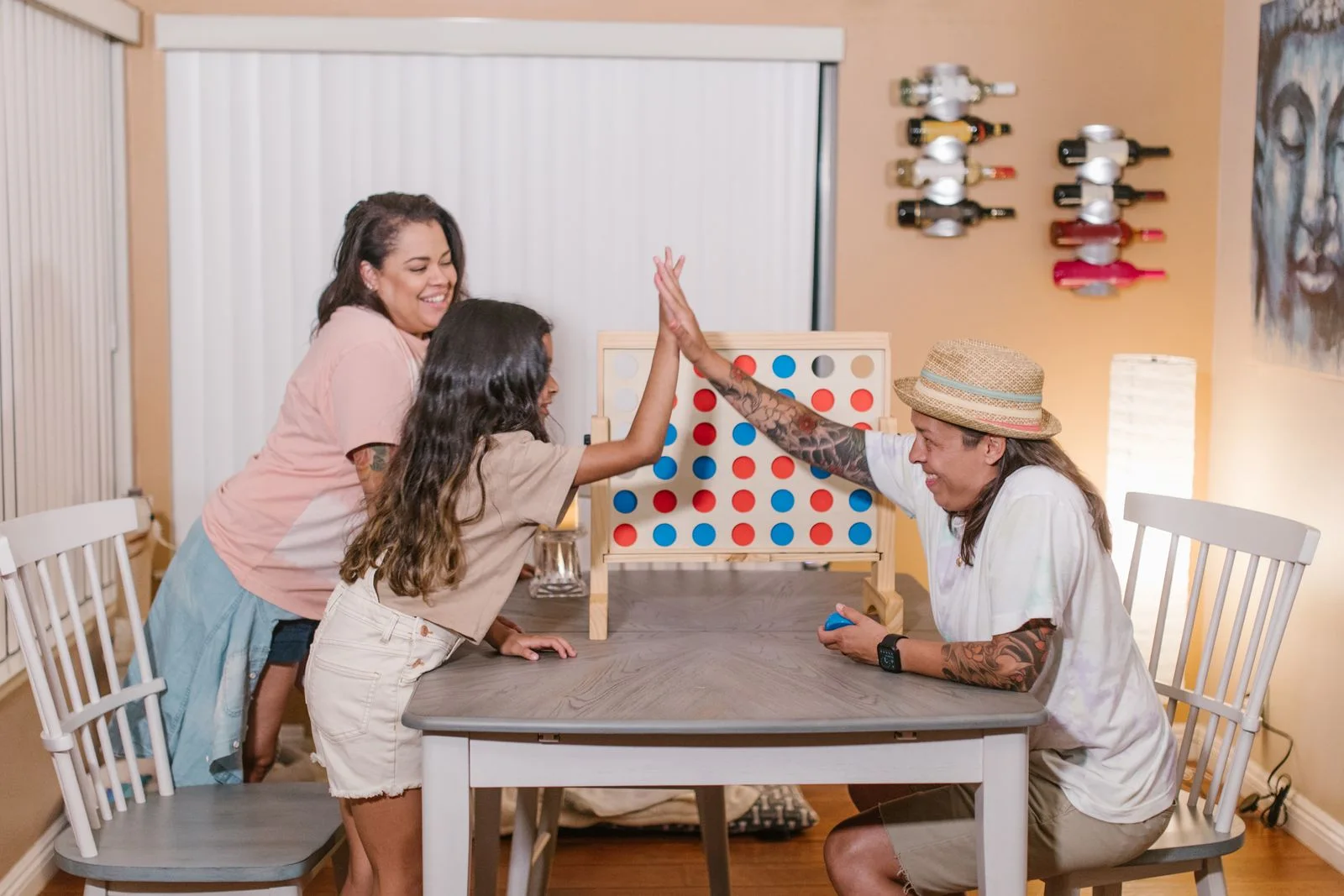
Keep these decisions somewhere useful rather than turning them into another elaborate system. For this project, the most important comparison is between what already works and what a purchase would actually change. Can provide a repeatable shared activity. Playing time and rules must suit the group. That tradeoff is worth weighing before choosing the board game simply because it appears in an attractive room or outfit.
An alternative is to focus on the simple art materials. Support an open-ended afternoon project. Consumable supplies need storage and replenishing. Compare the two jobs instead of assuming both purchases are necessary. Start with the option that addresses the repeated inconvenience you have identified. When neither problem is happening in your household, keep using what you have. A buying guide should make it easier to decide against an unnecessary purchase as well as help you choose a useful one.
- Choose one shared anchor for each day.
- Check supplies already in the house.
- Give household work a clear endpoint.
- Leave room for different kinds of downtime.
Shop with a purpose
Options to consider
These are research starting points, not hands-on test results. Compare current specifications, dimensions, care instructions, return terms, and availability with the retailer before buying.
Board game
Can provide a repeatable shared activity.
The tradeoff: Playing time and rules must suit the group.
Explore at the retailer ↗Simple art materials
Support an open-ended afternoon project.
The tradeoff: Consumable supplies need storage and replenishing.
Explore at the retailer ↗A few common questions
Do I need to buy everything mentioned?
No. Begin with what you own, then choose only the item that solves a specific problem. The board game and simple art materials have different jobs; neither is a requirement for following the advice.
What should I compare before ordering?
Check dimensions or garment measurements where relevant, current care and use instructions, delivery charges and return conditions. In particular, remember this tradeoff: Playing time and rules must suit the group. Use the retailer’s current information rather than assuming a photograph answers those questions.