
A Laundry Routine Built Around Putting Clothes Away
Reduce laundry pileups by planning the full journey from hamper to drawer, including the part most routines forget.
Shopping note: The retailer links in this article are ordinary links. We are not currently using affiliate tracking. If a link earns us a commission in the future, we will label it. Our disclosure.
Start with the real day
Laundry is not finished when the machine stops. It is finished when the clothes are dry and in a usable place. That distinction explains why a household can run several loads and still feel surrounded by laundry. A manageable routine treats washing, drying and putting away as one connected job, while allowing the stages to happen at realistic times.
Identify where the process usually stalls. Is there nowhere to dry the load? Does folding wait for a quiet evening that never arrives? Are drawers too full to accept clean clothes? The answer determines what needs changing. Increasing the number of loads will not solve a blocked drawer. Start with the slowest stage rather than buying another hamper to contain the evidence.
Choose loads that can finish their journey
Check garment care labels and the instructions for your machine and detergent. Group items appropriately, then choose a load you have time and space to dry. A large load that cannot be managed through the next stage may be less useful than a smaller one you can complete. Account for shared machines, drying space and the weather when relevant. Your routine needs to fit the equipment you have.
Put a reminder where it will reach the person responsible for the next stage. Do not assume a machine sound will be heard across the house. If tasks are shared, agree who transfers, dries and puts away rather than using the vague instruction to do laundry. Clear ownership is especially useful on a day when one adult leaves home before the cycle finishes.
Make putting away less elaborate
Not every item requires the same folding method. Choose approaches that fit the storage and the person using it, while respecting garment care. Everyday socks and soft basics can live in simple divisions; delicate or structured items may need a different arrangement. A beautifully folded pile has limited value if the drawer cannot close. Leave enough room for clean clothes to return easily.
If sorting by person creates a bottleneck, try separate small baskets for the return journey. If baskets accumulate in bedrooms, reduce the number and change the handoff instead. The point is to discover the step people will complete, not the method that looks most impressive in a video. Keep special-care pieces separate enough that they do not accidentally enter the usual cycle.
Shop for the bottleneck you found
A drying rack is useful only if it fits when open and stores conveniently when closed. Check the dimensions and the manufacturer’s use guidance. A divided hamper can support a sorting habit, but it also occupies space and may create categories the household ignores. Compare the opening size and ease of carrying, particularly if the laundry area is on another floor.
Try one complete cycle with your revised approach before purchasing anything. If the sticking point is overcrowded storage, editing what goes into the drawers may help more than another accessory. If a broken basket makes carrying difficult, replace that specific tool. Keep the routine flexible during unusually busy weeks. The aim is a reliable supply of wearable clothes, not an uninterrupted procession of perfectly styled laundry baskets.
A short checklist to keep
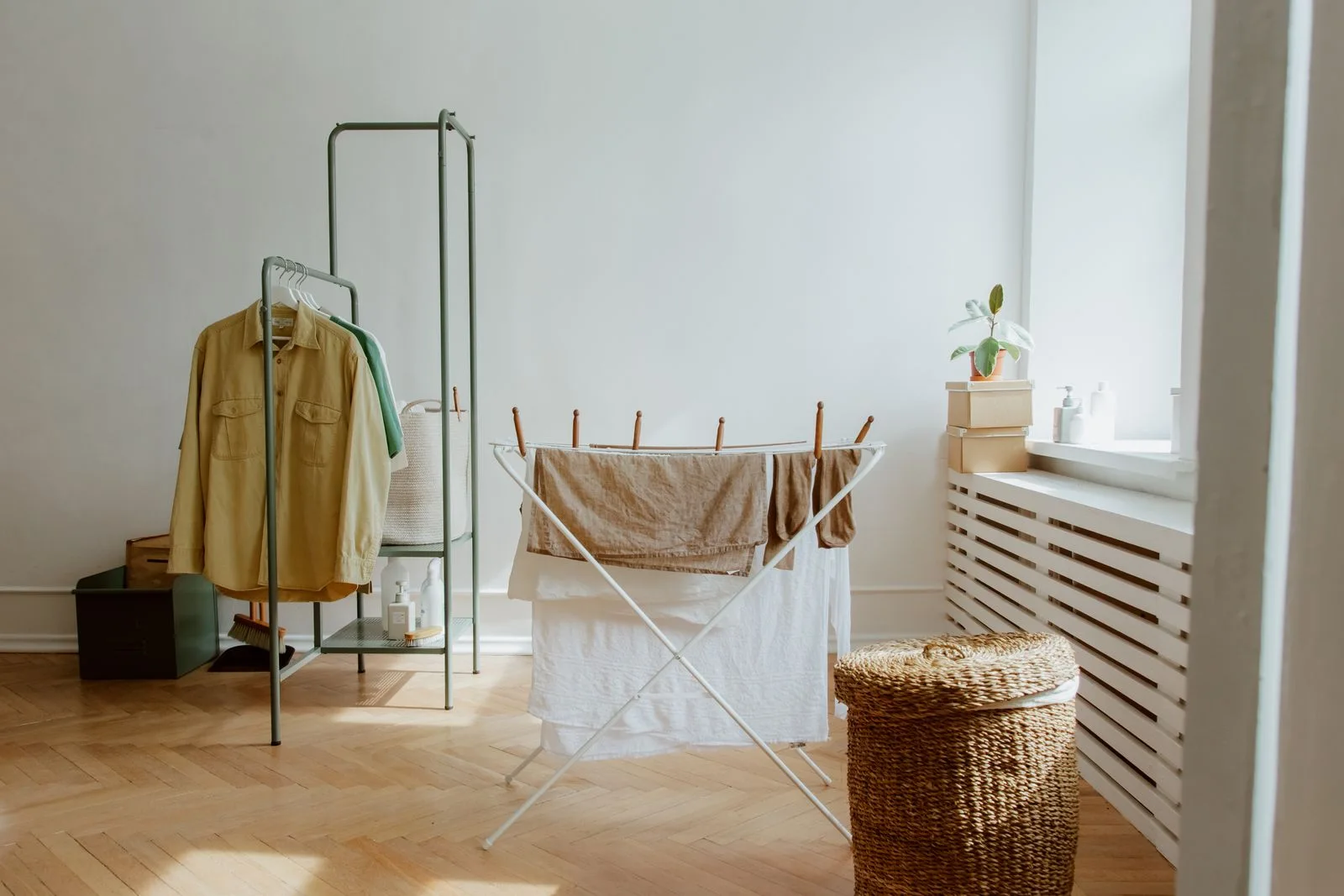
Keep these decisions somewhere useful rather than turning them into another elaborate system. For this project, the most important comparison is between what already works and what a purchase would actually change. Adds a drying location when the layout allows it. Its open footprint can be substantial. That tradeoff is worth weighing before choosing the folding drying rack simply because it appears in an attractive room or outfit.
An alternative is to focus on the lightweight laundry basket. Makes the return trip to storage easier. Extra baskets can become permanent holding areas. Compare the two jobs instead of assuming both purchases are necessary. Start with the option that addresses the repeated inconvenience you have identified. When neither problem is happening in your household, keep using what you have. A buying guide should make it easier to decide against an unnecessary purchase as well as help you choose a useful one.
- Find the stage where laundry stalls.
- Read garment and machine instructions.
- Plan drying space before starting a load.
- Leave room for clothes to return to drawers.
Shop with a purpose
Options to consider
These are research starting points, not hands-on test results. Compare current specifications, dimensions, care instructions, return terms, and availability with the retailer before buying.
Folding drying rack
Adds a drying location when the layout allows it.
The tradeoff: Its open footprint can be substantial.
Explore at the retailer ↗Lightweight laundry basket
Makes the return trip to storage easier.
The tradeoff: Extra baskets can become permanent holding areas.
Explore at the retailer ↗A few common questions
Do I need to buy everything mentioned?
No. Begin with what you own, then choose only the item that solves a specific problem. The folding drying rack and lightweight laundry basket have different jobs; neither is a requirement for following the advice.
What should I compare before ordering?
Check dimensions or garment measurements where relevant, current care and use instructions, delivery charges and return conditions. In particular, remember this tradeoff: Its open footprint can be substantial. Use the retailer’s current information rather than assuming a photograph answers those questions.