Small Entryway Storage That Leaves Room to Walk
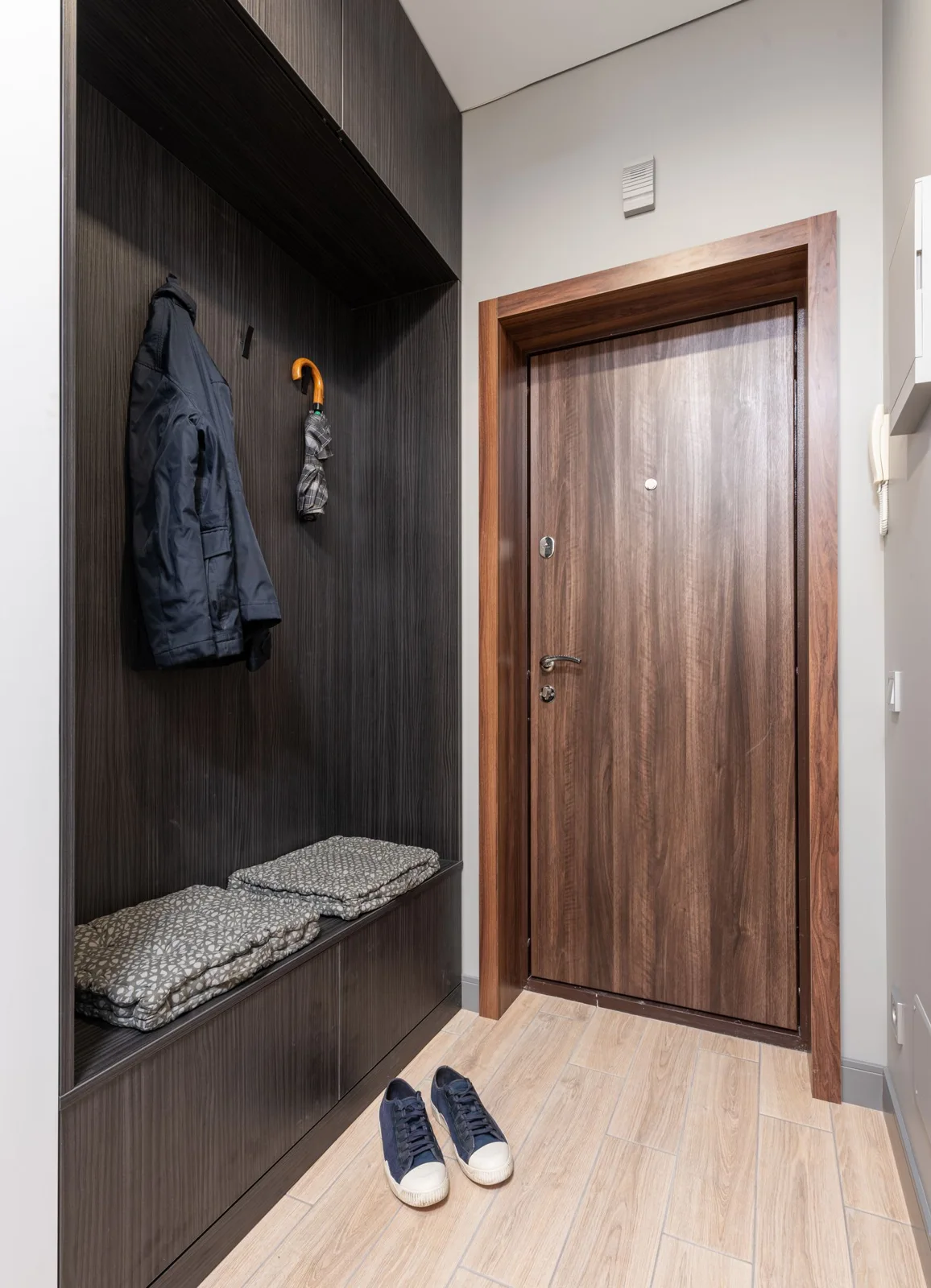
Choose an entry arrangement for shoes, bags and daily essentials without turning a narrow hallway into a furniture showroom.
Shopping note: The retailer links in this article are ordinary links. We are not currently using affiliate tracking. If a link earns us a commission in the future, we will label it. Our disclosure.
Start with the real day
A small entryway needs to handle a large number of transitions. People arrive with bags, remove shoes, set down post and look for keys. The tempting response is to add furniture for every category. In a narrow hallway, that can solve storage while creating a new problem: there is nowhere comfortable to pass. Start with movement and let storage fit around it.
Measure the space with doors fully open, including cupboards and nearby rooms. Notice radiators, switches and other features that limit placement. Consider how people enter while carrying shopping or guiding a stroller. A slim unit may still project too far if its handles catch bags or its door blocks the route. Dimensions on a retailer’s page need to be compared with the complete usable space.
Keep daily storage different from overflow
The entrance only needs to hold what is useful near the entrance. Off-season footwear and spare bags can live elsewhere if the home allows it. Set a practical limit on the everyday shoes that stay by the door. This is easier when another location exists for the rest, rather than expecting an overflowing rack to remain tidy through willpower.
Choose one surface or small tray for adult essentials. If post arrives here, give it a route onward rather than building a permanent archive. Open shelving makes retrieval straightforward but leaves contents visible. A closed cabinet can look quieter, although it requires opening and enough clearance. Decide which compromise suits the hallway before choosing a finish or matching accessories.
Use vertical space deliberately
Wall-mounted storage can preserve floor area, but its suitability depends on the wall, fittings and load. Follow installation and furniture anchoring instructions, and get appropriate help when necessary. Avoid placing protruding hooks where they create an awkward passage. A mirror may improve the feeling of space, but it cannot change the width available for walking or make a badly placed unit disappear.
If renting, check the rules before attaching anything. A freestanding alternative may be easier to move, though its stability and footprint still matter. Test positions with tape or a cardboard outline before purchasing. Leave the outline in place during a normal day so you can notice whether the proposed depth interferes with passing, opening doors or bringing larger objects inside.
Choose the smallest useful upgrade
If shoes spread across the floor because the existing rack is broken, replace the rack. If they spread because it is already full of seldom-worn pairs, edit the contents first. Storage should answer a specific repeated problem. A matching bench, cabinet and coat stand may be unnecessary in a hallway that needs only one basket and an agreed place for keys.
Look for cleanable surfaces, accessible openings and dimensions that fit your actual belongings. Check whether assembly or wall attachment is required before ordering. Keep decorative objects limited to what does not interfere with daily use. The entrance can still look welcoming: a considered color, a useful mat and a clear surface may do enough. Its most valuable feature is the space it leaves for coming and going.
A short checklist to keep
Keep these decisions somewhere useful rather than turning them into another elaborate system. For this project, the most important comparison is between what already works and what a purchase would actually change. Can consolidate daily footwear in a small footprint. Some units require wall attachment and door clearance. That tradeoff is worth weighing before choosing the slim shoe storage simply because it appears in an attractive room or outfit.
An alternative is to focus on the small catchall tray. Gives adult keys and small items a defined address. It becomes a miscellaneous pile if never cleared. Compare the two jobs instead of assuming both purchases are necessary. Start with the option that addresses the repeated inconvenience you have identified. When neither problem is happening in your household, keep using what you have. A buying guide should make it easier to decide against an unnecessary purchase as well as help you choose a useful one.
- Measure door swings as well as walls.
- Keep only everyday items at the entrance.
- Follow installation and anchoring instructions.
- Test furniture depth before ordering.
Shop with a purpose
Options to consider
These are research starting points, not hands-on test results. Compare current specifications, dimensions, care instructions, return terms, and availability with the retailer before buying.
Slim shoe storage
Can consolidate daily footwear in a small footprint.
The tradeoff: Some units require wall attachment and door clearance.
Explore at the retailer ↗Small catchall tray
Gives adult keys and small items a defined address.
The tradeoff: It becomes a miscellaneous pile if never cleared.
Explore at the retailer ↗A few common questions
Do I need to buy everything mentioned?
No. Begin with what you own, then choose only the item that solves a specific problem. The slim shoe storage and small catchall tray have different jobs; neither is a requirement for following the advice.
What should I compare before ordering?
Check dimensions or garment measurements where relevant, current care and use instructions, delivery charges and return conditions. In particular, remember this tradeoff: Some units require wall attachment and door clearance. Use the retailer’s current information rather than assuming a photograph answers those questions.